Platform
Platform overviewHow the FMS and the TMS fit togetherFreight Management SystemFreight you buyCario Fleet (TMS)Freight you runIntegrationsERP, WMS and eCommerceAnalytics & reconciliationInvoice checking and reportingAI capabilityAvailable today and comingData architectureHow execution data flows
Resources
The AI Freight PaperInsightsTrust & governance
Proof
Customer storiesThe numbersQuestions answered
Company
Our storyBook a freight auditPrivacy Policy
Cario/Platform

Freight belongs
inside your ERP.
Not beside it.

Cario is a freight management system (FMS) and transport management system (TMS). Multi-carrier freight execution and your own fleet, in one platform, connected to the systems you already run.

Quote, consign, label, manifest, track and reconcile without ever leaving the system your order already lives in. Whichever ERP, WMS or eCommerce platform that is. One source of data, no re-keying, nothing to reconcile between two systems.

Sales Order · SO-104822Cario · in your ERP
Ship-to Rotterdam DC · 4 lines · 812 kg · 3 pallets
Selected in-orderNo re-keying · 1 record
Your teams and systems connect through Cario out to every carrier and freight mode
ONE CONNECTION · EVERY CARRIER, EVERY MODE, PLUS YOUR OWN FLEET
Integrations

The order never leaves. Neither does your team.

Most freight platforms sit beside your systems and ask your people to work in two places, then reconcile the difference at the end of the month. Cario connects into the stack you already run, whether that is ERP, WMS or eCommerce, so freight happens on the order, in the record, first time. One integration, whatever is upstream.

Quote

Live carrier rates and ETAs returned onto the order line.

Consign

Consignments built from order data. No addresses re-keyed.

Label & manifest

Carrier labels, notes and batch manifests raised in place.

Track

Status and exceptions written back against the order.

Reconcile

Real landed cost matched to the invoice before payables.

One integration. Whatever sits upstream.

Cario is built to be system-agnostic. There are deep native connectors where they earn their keep, and a documented open API everywhere else, so the platform you run today does not limit the freight platform you can run tomorrow.

ERP
SAP S/4HANA & Business OneDynamics 365 Business CentralDynamics 365 F&ONetSuiteProntoInforJD Edwards+ open API
WMS & 3PL
Warehouse management systemsThird-party logistics platformsMulti-site and multi-region setupsCustom order management systems+ open API
eCommerce
ShopifyWooCommerceMagentoMarketplace and D2C storefronts+ open API
Data & AI
Microsoft AzurePower BI reportingAzure AI servicesSecure agent access layer+ open API

Kärcher runs Cario three ways: SAP, a 3PL system and Cario in one workflow. Jaybro ran it across eight separate ERPs while consolidating onto one. Airco runs it against SAP Business One across two countries. See the stories →

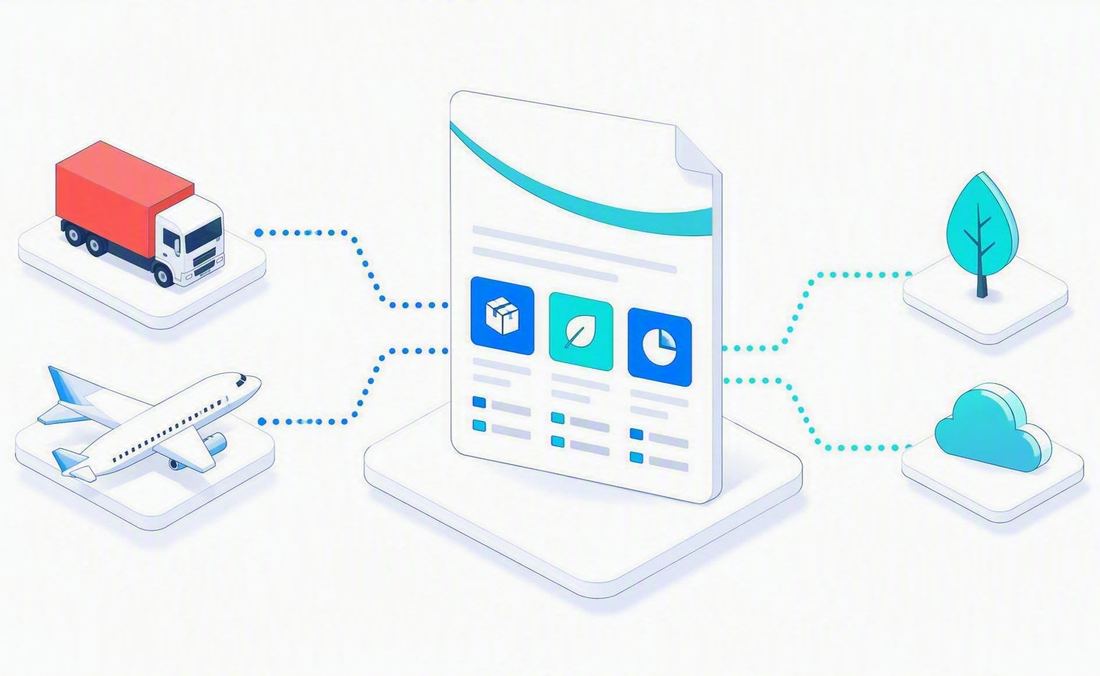
ERP and warehouse systems feeding through Cario out to road and air freight
YOUR SYSTEMS IN · FREIGHT EXECUTION OUT
Platform

Two systems. One platform.

Freight you buy and freight you run are usually two different problems, handled by two different vendors. Cario covers both in a single platform, so carrier network and own fleet are one decision, on one record, in one report.

FMS

Freight Management System

Any carrier, any freight type, one way of working.

The FMS handles freight you buy from someone else. It gives warehouse, customer service, sales and finance teams a single place to quote, book, manifest, track and reconcile, whatever the freight type and whichever carrier ends up moving it. Your rates and contracts stay yours, and the workflow adapts to how your business already runs.

  • Rate comparison and booking across the carrier network, in one interface.
  • Manifesting and dispatch, including labels, notes and batch close.
  • Tracking, POD and exception handling with image attachments.
  • Reverse logistics and consignments that span multiple carriers.
  • Customer-facing tracking presented under your own brand.
  • Rules-driven automation keyed to your internal references.
EXPLORE THE FMS IN FULL →
TMS

Cario Fleet

Your vehicles. Your drivers. Your last mile.

Cario Fleet handles freight you move yourself. Dispatch teams plan and assign work, drivers run it from a phone, and every scan, signature and photo lands back against the same order the warehouse raised. Contracted drivers sit on the same board as your own vehicles, so the whole delivery operation reports as one thing.

  • Route planning and assignment across vehicles and contractors.
  • Routing that recalculates when the day does not go to plan.
  • Scan-driven milestones from collection through to the door.
  • Signature capture on the device, logged instantly against the order.
  • Photographic evidence and outcome codes, including non-delivery.
  • A driver application for iOS and Android, synced continuously.
EXPLORE CARIO FLEET IN FULL →
FMS

Freight Management System

Capabilities in full · freight you buy

Every carrier, one way of working.

The carrier network is the starting point, not the product. What matters is that quoting, booking, tracking and reconciliation all happen against the same record, in a workflow shaped around your freight rather than around a vendor's assumptions. Your rates, your contracts, your routing logic.

ParcelPalletizedFull truckloadAirSeaRailRoadRefrigeratedDangerous goodsBreak bulkReturnsMulti-leg

A network you can actually use

500+ carriers reachable through one connection, priced on your contracts or ours, with no per-carrier integration work.

Data that lands where you work

Status, cost and delivery outcomes flow back into your own systems as they happen, not as an overnight file.

Your brand at the door

Tracking, notifications and self-serve visibility carry your identity, whoever is driving the vehicle.

The awkward freight too

Returns, oversize, dangerous goods and journeys that need three carriers, handled in the same workflow.

Choosing and booking

The decisions made at order entry, and the tools to make them well.

One interface, every carrier

Carrier relationships, rate cards and booking behavior managed in a single place instead of a browser full of portals.

Compare, then commit

Price and transit time side by side at the point of decision, with the ability to change carrier when circumstances shift.

Consignments from order data

Shipments created from what the order already knows, with tracking numbers issued back against it.

Returns handled as a workflow

Reverse movements treated as a normal process instead of an exception someone handles by email.

Journeys across several carriers

Link carriers into a single movement where no one operator covers the full route.

Least cost, fastest, or preassigned

Selection driven by your commercial policy, applied consistently rather than left to individual judgement.

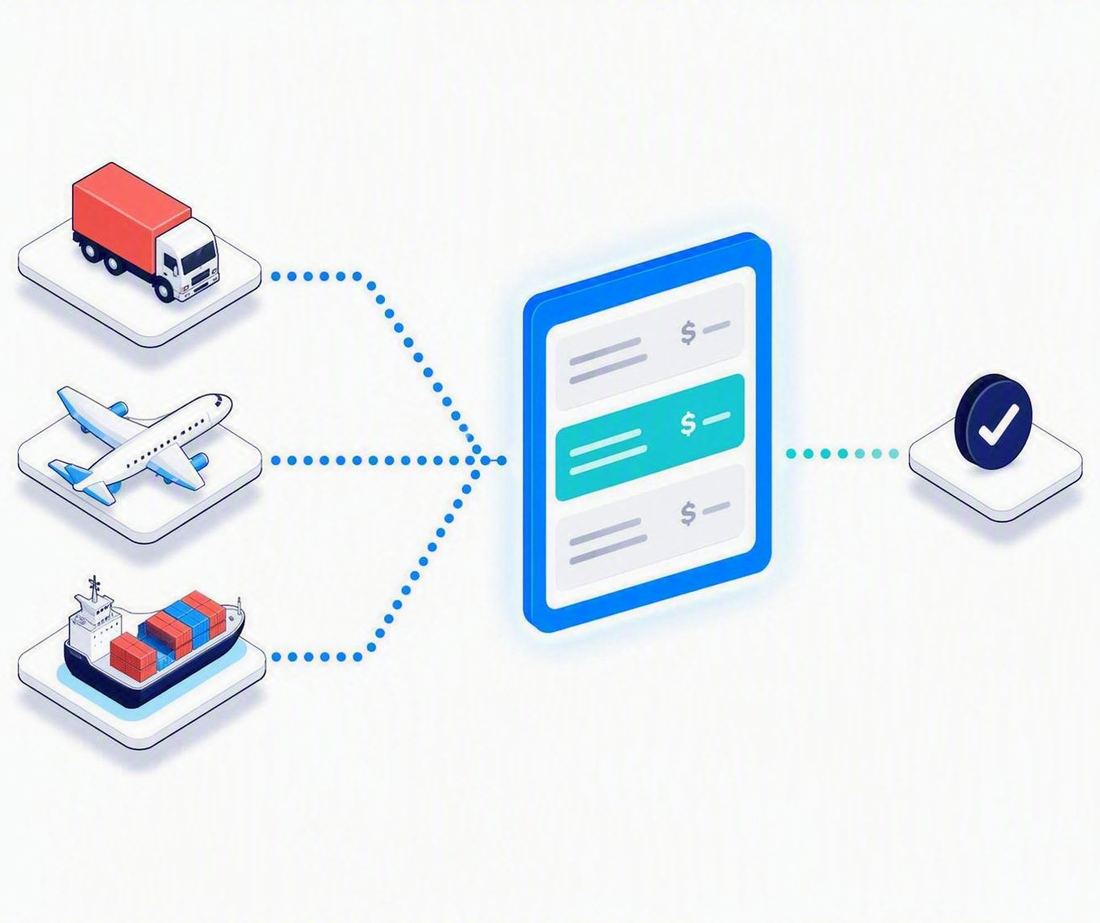
Road, air and sea carrier options compared on price in one panel, with a single service selected
EVERY MODE PRICED SIDE BY SIDE · ONE SERVICE COMMITTED

Shaping it to your operation

Where most platforms ask you to change, and where Cario is designed to give.

Advance shipping notices

ASN formats built to your specification and to what your customers' receiving systems expect.

Tracking under your name

A self-serve tracking experience that keeps the customer relationship with you rather than the carrier.

Your negotiated rates

Load your own commercial terms and retain control of the margin between cost and what you charge on.

Drop ship and white label

Ship from supplier to end customer without the supplier relationship becoming visible.

Bulk, assets and pallets

Break bulk workflows alongside returnable asset tracking and pallet pool accounts.

Regulated freight

Dangerous goods declarations produced as part of the booking, with service enablement by country.

Knowing what it cost

The financial half of freight, which is where most of the recoverable money sits.

Reporting without a BI project

Spend, carrier performance and lane analysis available from inside the platform, ready to run.

Cost-to-serve by customer

Understand what individual customers and lanes really cost to serve, before the margin conversation.

Invoice checking, automated

Carrier invoices compared against what was booked, with only the differences surfaced for review.

  • Field mapping configured once per carrier and reused
  • Estimated cost measured against invoiced cost automatically
  • Accept, adjust, or hold the original figure for dispute
Alerting on what matters

Thresholds for delivery failure, delay or high-value freight, so problems reach a person without being hunted for.

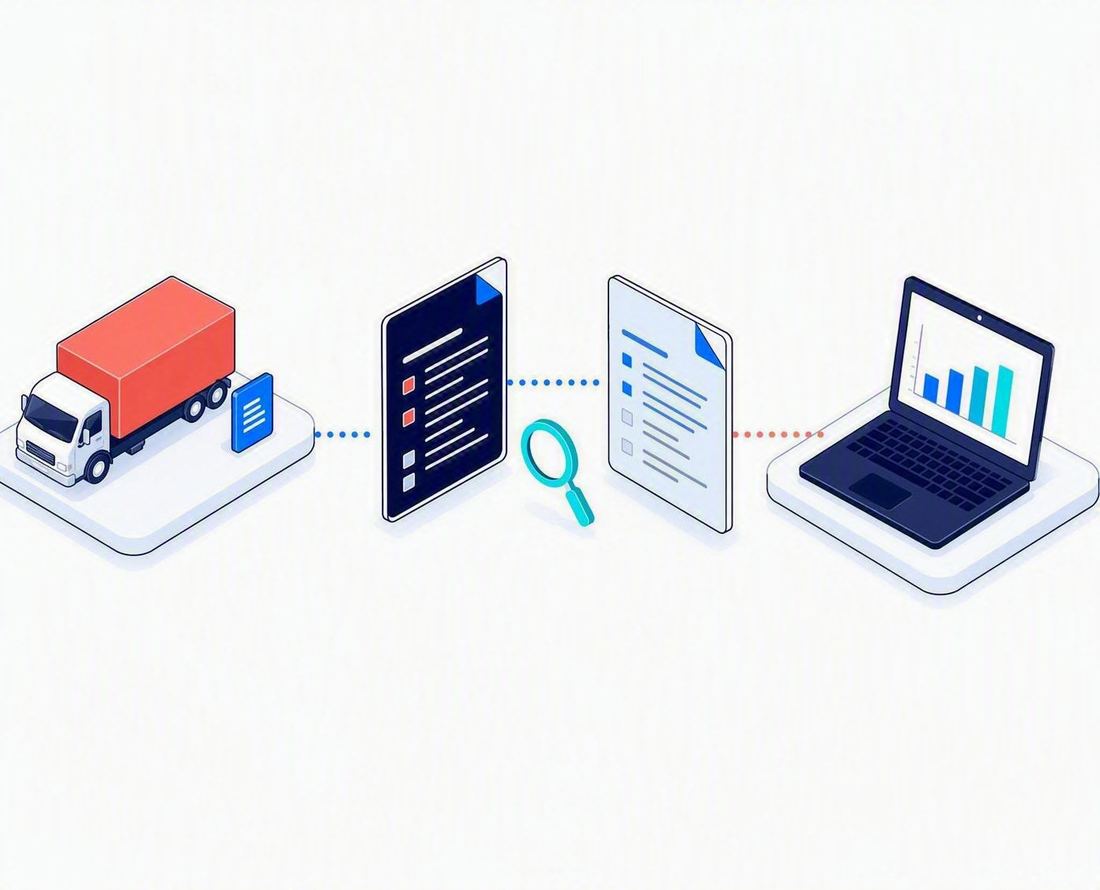
A shipment record and a carrier invoice compared line by line, feeding reporting on a laptop
WHAT WAS BOOKED · WHAT WAS BILLED · WHAT IT REALLY COST

Connection and carbon

Freight data where the business already works, and emissions measured off the same record.

Live status in the system of record

Delivery state and cost visible where your team already spends its day, without a second login.

Automation on your logic

Carrier and service selection driven by your business rules and your own reference numbers.

Service teams that can answer

Full delivery visibility across every carrier, so enquiries are resolved rather than escalated.

Emissions as a by-product

Carbon reporting derived from execution data rather than assembled once a year from spend.

  • Scope 3 measured across every freight mode
  • Attributed by carrier, route, load or vehicle
  • Available as a selection criterion, not only a report

Deploy and connect, open up the carrier network, track everything in one place, then use what you learn to negotiate better. Book a freight audit →

TMS

Cario Fleet, Transport Management System

Capabilities in full · freight you run

Full control of every delivery you run.

Running your own delivery fleet gives you control over the customer experience and exposes you to costs and obligations a carrier would otherwise absorb. Cario Fleet is built for both halves of that trade: the planning and routing that makes a fleet efficient, and the evidence trail that keeps it compliant.

Own fleetContracted driversRoute optimizationLive trackingeSign PODPhoto captureDriver hoursStore replenishmentDealer portal

One board for every vehicle

Owned trucks and contracted drivers planned, assigned and measured together instead of in separate systems.

Know before they call

Live position, running status and slipping ETAs visible while there is still time to do something about it.

The doorstep is yours

Notifications, tracking and delivery conduct all carry your brand, because the driver works for you.

Difficult networks

Multiple geographies, mixed freight types and regular replenishment runs, kept efficient and accountable.

Dispatch desk, delivery van and driver, and receiving warehouse connected on one record
DISPATCH · DRIVER · RECEIVER, ON ONE LIVE RECORD
Cario Connect

The driver app that closes the loop

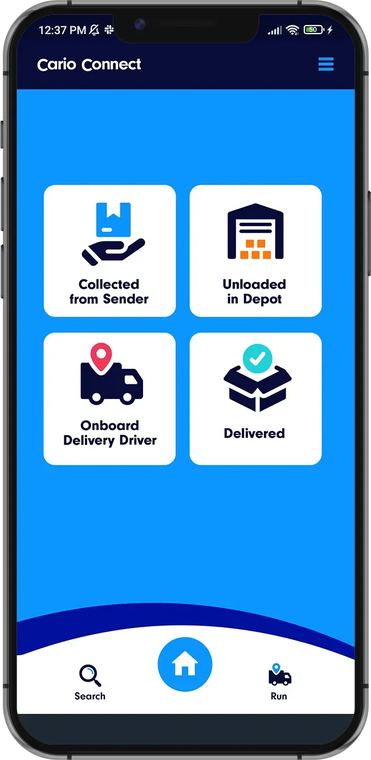
Every run reaches the driver as a simple set of tasks. They scan at each milestone, capture a signature or a photo at the door, and record the outcome even when the delivery does not go to plan. Nothing is written on paper and re-keyed later.

Each tap syncs straight back to the same order the warehouse raised, so dispatch, customer service and your connected systems see the same status at the same moment.

  • Collected from sender scanned at pickup
  • Unloaded in depot for multi-leg movements
  • Onboard delivery driver with live position
  • Delivered with signature, photo and outcome code
Cario Connect driver app showing scan milestones from collection through to delivery

Three teams, one live record

Dispatch, drivers and receivers do very different jobs. They should not be working from different information.

Dispatch

Planning and control

Operations teams build and optimize routes, allocate work across vehicles and contractors, and manage exceptions as they surface. Route optimization reduces both hours travelled and total distance per run.

Drivers

Execution in the field

Drivers receive their run on a phone, scan freight, follow the optimized sequence and capture proof at each stop. Everything they record syncs back to the platform and into your connected systems immediately.

Receivers

Sites and stores

Receiving teams see what is inbound and when it is expected, which lets them roster staff and prepare dock space. A dealer portal extends the same view to third parties without giving them platform access.

Planning the run

Getting the right freight on the right vehicle, in the right order, before anyone leaves the yard.

Owned and contracted, together

Plan and track all delivery work in one system, whether the vehicle belongs to you or to a contractor.

  • No second platform for the overflow fleet
  • Routing that cuts both time and total distance per run
Buy it or run it

Weigh in-house delivery against a contracted carrier on the same screen, using real comparative cost.

  • Pick the most efficient mode for each movement
  • Hold service quality against commercial targets
Work arriving without keying

Daily consignments flow straight through from Cario, or drivers scan a barcode to pull the job up on the spot.

Contractor visibility

Third-party drivers appear on the same dispatch board and in the same performance reporting as your own team.

The delivery itself

What the customer experiences, and what you can demonstrate afterwards.

Watching it happen

Operations and customer service see delivery progress as it unfolds, minute by minute.

  • Live tracking across every active run
  • Delays surfaced while intervention is still possible
Evidence for every outcome

Proof captured at the door and attached to the order without anyone filing anything.

  • On-screen signature and photographs at the point of delivery
  • Failed and partial deliveries documented with notes and images
  • Structured codes for attempted delivery, unsafe to leave, and no access
Inbound visibility for sites

Accurate arrival times and live delay alerts, so receiving teams can plan rather than wait.

  • Real-time view of what is arriving and when
  • Staffing and dock allocation adjusted against live data
Milestones along the way

Scan-driven events at collection, linehaul and delivery build a complete picture of the journey.

Cost and obligation

Operating vehicles creates duties. Cario Fleet records them as a by-product of doing the work.

Hours behind the wheel

Driver hours captured with start and stop logs backed by GPS verification.

  • Shifts recorded automatically from vehicle movement
  • Supports fatigue obligations and driver welfare
Third-party cost control

Reconcile contractor and 3PL invoices, including hourly local delivery rates, against the delivery record.

  • Match invoiced work to what was actually performed
  • Compare in-house cost per drop against contracted alternatives
Fleet economics

Running vehicles across a national footprint is expensive. Inclusions and add-ons are structured so the platform cost scales with what you actually operate.

Your own emissions

Carbon from your vehicles calculated on the same basis as contracted carriers, so the reporting stays comparable.

A driver application for iOS and Android, paired with dispatch and delivery management in one transport management system. Book a freight audit →

DATA

Analytics & Reconciliation

Capabilities in full · what freight actually cost

Freight decisions, made on evidence.

Freight is usually one of the largest line items a business cannot explain. The rates were agreed, the shipments went out, and the invoice arrives bearing little resemblance to either. Because Cario holds the booking and the invoice on the same record, the gap between them becomes visible and arguable rather than something finance absorbs.

Invoice reconciliationDiscrepancy toleranceCarrier creditsShort-payOn-time performanceAccrualsSpend by carrierSpend by laneException reportingValue alertsLive operations view

Check every charge

Full freight cost compared line by line, including fuel and accessorials, so overcharges surface instead of being absorbed.

Only look at what matters

Set a dollar tolerance and review the exceptions. Nobody checks thousands of consignments that came in correct.

Judge carriers on record

On-time delivery and exception rates by carrier and lane, so rate negotiations run on performance data rather than assertion.

See today, not last month

A live operational view of what has been created, manifested and dispatched, so problems are caught during the day.

Reconciling what you were charged

The structured alternative to a finance analyst, a spreadsheet and a stack of carrier PDFs.

Invoice upload and mapping

Every carrier formats invoices differently. Map each one once and reuse that mapping for every upload afterwards.

  • Consignment note, pickup date, items, weight and volume
  • Freight charge, accessorial fees, net, tax and total
  • Mapping reused while the invoice structure holds
Expected against invoiced

The cost quoted at booking sits beside the amount billed, at consignment level, with the variance calculated for you.

  • Surcharges and fuel included in the comparison
  • Weight and cubic re-measurement made visible
  • Reasons for the difference attached to the shipment
A tolerance you control

Set the dollar threshold below which a variance is simply accepted, so review effort goes where the money is.

Accept, adjust or dispute

Three clear outcomes per discrepancy, applied consistently across large volumes rather than case by case.

Credits and short-payment

Track carrier credits through to resolution, and short-pay an invoice where the disputed amount is not owed.

Into your accounting system

Approved balances flow through to finance rather than being re-keyed, so reconciliation closes rather than stalls.

Reporting that changes a decision

Built on your own freight history, which is the only benchmark that means anything in a rate conversation.

Where the money actually goes

Freight spend analyzed across the dimensions that drive commercial conversations.

  • By carrier, by region or country, by receiving customer
  • Measured against weight, cubic volume or consignment count
  • Trended over months and years, not just the current period
Carrier performance, evidenced

Delivered in full and on time, reported per carrier and per lane, so you know who earns their rate.

  • Take on-time performance data into your next tender
  • Compare carriers on outcomes rather than promises
Exceptions worth chasing

Reporting that isolates the deliveries needing intervention instead of listing everything that moved.

Month-end without the scramble

Accrual reporting for freight in transit and billed but unreconciled, so the finance close is not held hostage by carriers.

Cost-to-serve by customer

What it genuinely costs to serve each account, which is usually where the margin conversation should have started.

Analytics on your own data

A business intelligence layer over the freight record, so improvement opportunities can be found rather than guessed at.

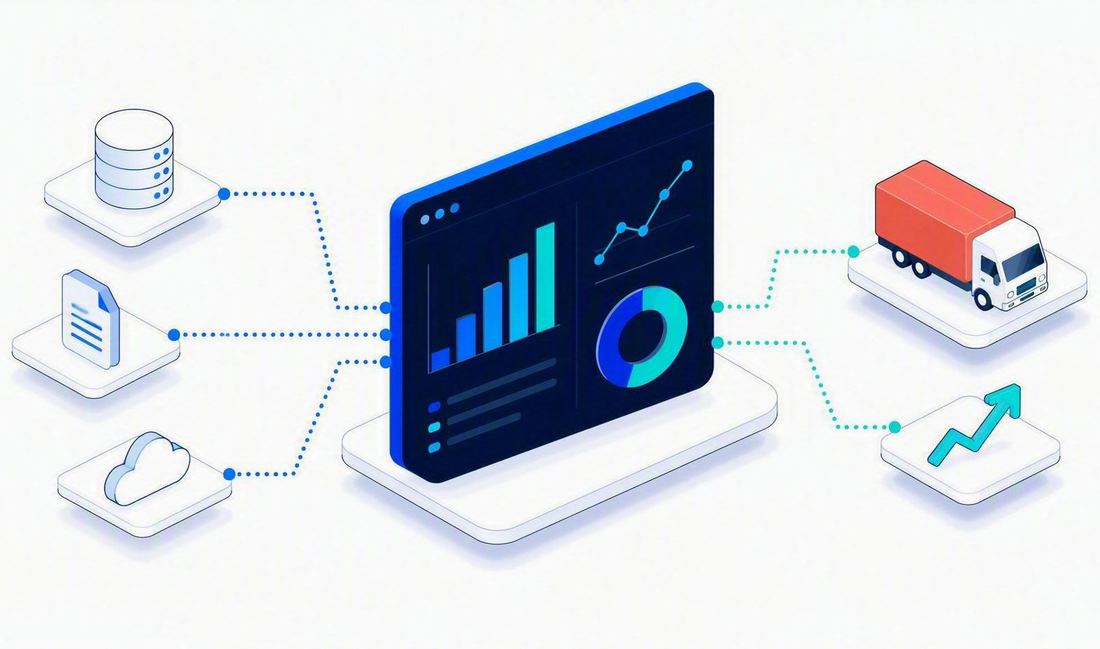
Freight data from multiple sources feeding a single analytics dashboard showing spend, trend and carrier mix
EVERY SOURCE IN · ONE VIEW OF SPEND, SERVICE AND TREND

Knowing during the day, not after it

Reporting explains yesterday. Alerts and a live view let you change today.

Alerts on the things that hurt

Thresholds you define, delivered by email or SMS to the people who can act on them.

  • High-value consignments above a dollar figure you set
  • Freight created but never manifested
  • Bookings that failed with the carrier
A banner when it matters

Network-wide notices for weather events, carrier disruption or anything the whole team needs to see at once.

Today at a glance

What has been created, what is manifested, what still needs action, and which services are carrying the load.

  • One view instead of three systems and a phone call
  • Unmanifested freight surfaced before it misses pickup
Answers without the hunt

Service teams see delivery state across every carrier, so a customer question is resolved rather than escalated.

Carbon on the same record

Emissions calculated from what actually moved, so sustainability reporting is a by-product rather than a project.

Scope 3 across every mode

Road, rail, air and sea measured on a consistent basis, covering both contracted carriers and your own vehicles.

Attributed where decisions are made

Broken down by carrier, route, load or vehicle, so the number can be traced back to a choice someone made.

Audit-ready when asked

Reporting derived from execution data rather than reconstructed from spend once a year under time pressure.

A filter, not just a report

Emissions available alongside price and transit time at the point of carrier selection, if that is how you want to buy.

Freight movements across road and air feeding a carbon emissions report, with tree and CO2 equivalents
WHAT MOVED · WHAT IT EMITTED · REPORTED BY CARRIER AND MODE

Freight spend you can explain, carrier performance you can prove, and a month-end that does not depend on chasing invoices. Book a freight audit →

Architecture

Your ERP holds the plan. Cario holds the truth.

Your ERP records what was supposed to happen. Cario captures what actually did: every event, exception, POD and real landed cost. It writes that back to the same record, normalized and ready to be used.

YOUR SYSTEMSThe plan: what is supposed to happenERPSAP · Dynamics 365 · NetSuite · ProntoWMS & 3PLWarehouse and logistics platformseCommerceShopify · Woo · Magento · D2COpen APICustom and in-house systemsORDERS INSTATUS & COST WRITTEN BACKCARIOExecution and cost intelligenceQuoteBookManifestDispatchTrackPODReconcileDATA & INTELLIGENCE LAYEROne normalized execution recordAnalytics and reportingCarbon attributionOptional AI capabilityEXECUTION OUTPHYSICAL EXECUTIONThe reality: what actually happens500+ contracted carriersParcel · pallet · FTL · air · sea · rail · final mileYour own fleetVehicles, drivers and contracted delivery partners
One decision

Carriers and fleet, together

Most platforms rate-shop a carrier network. Cario also runs your vehicles and drivers, so buying freight or moving it yourself is a single comparison rather than two systems arguing.

One record

Cost at transaction level

Captured as the movement happens, not reconstructed from an invoice six weeks later. The decision is made before the money is committed.

One tenant

Your data stays yours

Each customer runs on a dedicated data and analytics layer. Your operation's information is used to improve your operation, and nobody else's.

The thesis

Ask a supply chain leader about AI and, given enough time, they stop talking about AI altogether. What they describe is something simpler. They want freight to stop being a thing they have to think about.

Cario, The AI Freight Paper
Request the paper →

They don't want better visibility. They've had visibility for a decade. They don't want another dashboard, another portal, another single pane of glass to stare into while the cost is already incurred.

The category is full of platforms that connect things. Connection was the last decade's problem, and it's solved.

The unsolved problem is judgment at volume. Thousands of small freight decisions a day, each too minor to escalate and too numerous to get right by hand.

Level 1

You are told

Alerts fire. Exceptions surface. Your team reads them and reacts. This is what the market calls visibility. It is table stakes now.

Solved · commodity
Level 2

You are warned

Prediction moves the alert earlier. You intervene before the customer calls. Better, but a human still makes every decision, and the queue keeps growing.

Where the market sits
Level 3

It is handled

Software proposes or acts inside limits you define, and your team is placed at the points where judgment genuinely matters. This is the direction of travel, taken in steps.

Where Cario is heading
AI capability

Adopt it at your own pace.

AI in Cario is optional, purchased separately, and introduced one capability at a time. Nothing switches itself on, nothing acts outside limits your team has agreed, and most customers begin with reporting and insight long before anything is automated. Below is an honest view of what exists today, what is available as an addition, and what is still being built.

Available today

In production with customers now. Included or available as an add-on depending on your subscription tier.

Optional module

Available as a paid addition, scoped and configured with you before it is enabled on your data.

In development

On the roadmap and being built. We will talk about timing honestly rather than sell you a slide.

Executive briefing

Turns the day's freight activity into a short written summary of what changed and what deserves attention.

● Available today

Analytics and reporting

Natural-language querying across your freight data, with automated reporting on spend, service and lanes.

● Available today

Invoice and cost checking

Compares booked cost against invoiced cost and surfaces the differences for a person to approve or dispute.

● Available today

Emissions insight

Attributes Scope 3 across modes and highlights where a different carrier or mode would reduce the footprint.

● Available today

Customer service assistance

Drafts responses to shipment status enquiries for your team to review, rather than answering on your behalf.

○ Optional module

Delay and exception prediction

Flags shipments at risk of running late using network and carrier signals, so your team can intervene early.

○ Optional module

Scenario and rate analysis

Models carrier, mode and consolidation options against your own volumes ahead of a tender or a rate review.

○ Optional module

Routing and consolidation support

Recommends consolidation and routing options across carriers and your own fleet for a planner to accept.

◇ In development

Dock and load desk

Sequencing for dock slots, load plans and yard movement against live execution data.

◇ In development

Every capability above operates inside limits your team defines, and anything that would commit money, change a carrier or affect a customer relationship is put to a person first unless you explicitly decide otherwise. How governance works →

Customers

Signed for by the people who run the freight.

Three operations, three different system landscapes, one pattern: execution centralized, data standardized, financial control strengthened.

KärcherWholesale · cleaning equipment

Bulk freight, handled precisely.

Around 80,000 shipments a year, split roughly 70% parcel and 30% palletized, and including large ride-on machinery that needs bespoke freight arrangements. The operation runs across three warehouses on a third-party logistics model, which meant freight had to work across SAP, the 3PL's system and the carrier network at once.

Cario sits between all three. Carrier selection and routing are continuously optimized rather than fixed, and errors in raw delivery data are caught and corrected before they misroute a parcel. When the business later benchmarked the arrangement against the market through a formal tender, it held up on both price and service.

The thing I love about the Cario system is its flexibility and its customizability to give you the exact solution that you need for your specific set of circumstances.Hamish Matheson · Managing Director, Kärcher
  • 80k+shipments a year
  • 70 / 30parcel to palletized mix
  • 3-waySAP, 3PL and Cario integration
  • 3warehouses, one workflow
JaybroCivil & infrastructure supplies

Eight ERPs. Three hundred carriers. One platform.

Rapid acquisition growth left the business running freight across more than 300 carriers, sixteen distribution centers and as many as eight ERP systems at once. The product range runs from small parcels and safety gear through to six-meter concrete barriers and dangerous goods, so no single carrier could ever cover it, and each acquisition brought another supply chain with it.

Sales and operations were logging into separate portals to book and chase freight, and finance had no reliable basis for forecasting cost. Cario brought every carrier into one platform, from tier-one networks down to small regional operators, and built emissions tracking into the same flow while the group moved toward a single ERP.

Cario delivered out-of-the-box wins and has been a true partner in helping us tackle our most complex freight challenges. With the data and tools they've provided, we're positioned not only to simplify but also to grow.Group Freight and Transport Manager, Jaybro
  • 30+ hrsmanual work removed weekly
  • 10%+freight cost reduction
  • 30%uplift in cost recovery
  • 16distribution centers unified
AircoHardware & industrial fasteners

Three brokerages down to one briefing.

Freight ran through three separate brokerages across two countries, with as many as forty carriers involved and only partial integration into SAP Business One. Different regions used different tools, the data never reconciled, and nobody could say with confidence what freight cost as a proportion of sales or which carriers were actually performing.

Consolidating onto Cario put order information into the freight process automatically, the moment the warehouse completes an order, carrying customer detail, references and delivery instructions with it. Leadership now receives freight intelligence as a written briefing in plain language instead of another report to interpret.

The best part of Cario is the combination of strong data and true integration. It's given us the visibility we need to challenge ourselves and improve how we operate.Adam Helder · National Operations Manager, Airco
  • 40 to 8carriers consolidated
  • 2 to 1countries, one freight process
  • SAP B1order-to-freight integration
  • 1view of cost and margin impact
The numbers

The pattern, across the base.

8–15%

freight cost reduction by eliminating leakage

30–50%

fewer exceptions through earlier intervention

20–40%

efficiency gain per FTE without added headcount

Same day.

cost opportunities caught, not found in a quarterly review

Representative results across Cario customers. We will model yours against your own data before you commit to anything. Book the audit →

Governance

Software assists. Your people stay accountable.

Automation without governance is just a faster way to be wrong. Anything Cario does on your behalf is bounded, attributable and reversible, and you decide how much latitude it has.

Limits you set

Value thresholds, lanes, carriers, customers and exception types. Outside the boundary, nothing proceeds without a person.

A complete record

What was seen, the options weighed, why one was chosen and what changed. Auditable end to end, indefinitely.

Tenant isolation

A dedicated data layer per customer. Your operation's data improves your operation, not a competitor's.

Judgment stays human

Disputes, negotiations, relationship calls and service-versus-cost trade-offs are routed to your team by design.

Insights

Think first. Then integrate.

Short pieces on the problems that keep showing up in freight operations, written for the people who have to make freight work.

Cost control

The freight invoice problem nobody wants to own

Freight invoices sit in a strange blind spot. Operations book the freight and finance pays for it, and the expensive gap between those two moments belongs to neither team. Operations has moved on to the next shipment by the time the invoice arrives. Finance has the invoice but not the context to know whether the charge is right.

The result is that a meaningful share of freight spend is simply accepted. Fuel surcharges shift, dimensional weight is recalculated by the carrier, a residential surcharge appears on a commercial delivery, and none of it is challenged because challenging it requires reconstructing what was agreed at booking, weeks later, by hand.

The fix is structural, not clerical. When the booked cost and the invoiced cost live on the same record, reconciliation stops being an archaeology exercise. The system compares what was quoted against what was charged, flags only the discrepancies, and lets finance accept, adjust or dispute with the evidence already attached.

Visibility

Visibility is only worth what you do with it

Visibility gets talked about as though it were an end in itself. It is not. Visibility matters because of what it lets you do: answer a customer without making three phone calls, intervene on a delay before it becomes a complaint, and hold a carrier to the service level you are paying for.

The practical test is whether your customer service team can answer a "where is my order" question without leaving their own system. If they are logging into carrier portals, the visibility you have is nominal. It exists somewhere, but not where the work happens.

The second test is whether visibility reaches your customer directly. Branded, self-serve tracking removes a large volume of inbound enquiry, and it keeps the delivery experience yours regardless of which carrier is driving the truck.

Last mile

Why the last mile keeps letting you down

The last mile is where most of the cost sits and where nearly all of the customer experience happens, which is an uncomfortable combination. It is also the part of the journey where you typically have the least information, because the vehicle is out of the depot and the next update arrives when something has already gone wrong.

Failed deliveries are the clearest symptom. A failed attempt costs the delivery twice, and the second attempt is rarely charged to anyone who can influence the outcome. Without photo evidence and structured outcome codes, "not delivered" is a category rather than an explanation.

Predictive visibility changes the economics. Knowing a run is slipping while the driver is still on the road allows the delivery window to be reset with the customer, rather than apologized for afterwards. That requires live tracking, structured proof of delivery for every outcome including the failures, and the ability to act on both.

Finance

The freight number your CFO cannot forecast

Would you sign off a budget knowing that a few percent of it was always wasted? Freight is one of the least predictable costs a CFO carries, and the unpredictability is rarely about carrier rates. It is about the difference between what was expected and what was eventually charged, spread across thousands of small movements.

The finance problem with freight is that the data arrives too late to act on. Cost is discovered at invoice, which is weeks after the decision that created it. By then the only available response is to note the variance and carry on.

Integration moves the number forward. When freight cost is captured at the moment of booking, against the order, in the system finance already reports from, cost-to-serve becomes something you can manage during the period instead of explaining after it.

Sustainability

Scope 3 freight emissions: measuring by carrier, mode and lane

Freight emissions are a Scope 3 category, which means they are generated by someone else on your behalf. That makes them harder to measure and easier to postpone, right up until a customer, an investor or a regulator asks for the number.

The common approach is an annual estimate built from spend data, which is defensible but not useful. It arrives once a year, it cannot be broken down to the decisions that created it, and it gives an operations team nothing to act on.

Emissions measured off the execution record behave differently. Attributed by carrier, route, load or fleet, they become another dimension you can optimize against, alongside price and transit time, at the point where the carrier is chosen. Reporting stops being a separate exercise and becomes a by-product of doing the work.

Procurement

Running a freight tender: benchmarking rate and service together

Most freight tenders are run on rate cards, which is the easiest thing to compare and the least complete picture. A carrier that is cheaper per consignment but generates more exceptions, more failed deliveries and more customer service load is not cheaper.

A useful tender needs performance data alongside price: on-time delivery by lane, exception rate, claims history, and the cost of the service overhead each carrier creates. That data has to come from your own records, not the carrier's.

This is where platforms earn their keep quietly. An operation running multi-carrier execution on one system already holds a benchmarked view of every carrier it uses. The tender becomes a validation of what you already know rather than a leap of faith.

Market

Why fragmentation makes multi-carrier the only sensible strategy

Some freight markets are consolidated. Others are not. In a fragmented market, thousands of carriers exist precisely because regional and modal specialization is necessary, and no single operator is good at every lane, every mode and every freight type.

The consequence for shippers is that a single-carrier strategy guarantees you are overpaying or underperforming somewhere in the network. The consequence for the market is a lack of transparency and very manual processes for anyone trying to compare pricing, options and service levels.

Multi-carrier execution is the structural answer, but it only works if the complexity is hidden. Managing forty carrier relationships across forty portals is worse than managing one. The value is in the abstraction layer, not the carrier count.

About

Built by people who had the problem first.

Cario was founded in 2018, out of a freight brokerage that had spent decades watching good operators lose money to fragmentation.

The insight was structural. In a fragmented freight market, no single carrier is good at every lane, every mode and every freight type, which is why thousands of them exist. The result is no transparency, and very manual processes for anyone trying to compare pricing, options and service levels.

So Cario was built as a cloud-based freight and transport management platform for organizations with genuinely complex operations. Not a digitized version of the old workflow, but a system designed around multi-carrier reality from the first line of code. Today it has changed the way more than 1,000 companies manage their freight.

What changed recently is what sits on top. Clean, normalized execution data across carriers, fleets and systems is the substrate that makes useful intelligence possible at all. That is the platform Cario is building now, and the reason freight execution and freight intelligence belong in the same place.

2018Founded, to solve multi-carrier freight properly
1,000+Companies running freight on the platform
500+Carriers connected across modes and freight types
AzureBuilt on Microsoft cloud infrastructure

Enterprise depth, not feature count

Multi-location setups, dangerous goods, break bulk, asset and pallet handling, country-level service enablement. We build for the hard cases.

Neutral by design

Bring your own carrier relationships and rates, or use ours. Cario never has a reason to prefer one carrier over another on your behalf.

Live in weeks, not quarters

Configuration, integration, joint testing and user acceptance run to a defined plan, with time-to-value milestones you hold us to.

Questions

Straight answers, before you ask us.

The questions we get asked most often in first calls, with real answers instead of a demo booking form.

Q01

What is Cario?

Cario is a cloud-based freight management system (FMS) and transport management system (TMS). It lets organizations quote, book, manifest, dispatch, track and reconcile freight across a network of more than 500 carriers, and also plan and run their own delivery fleet and drivers, all in one platform.

It can run standalone, or fully integrated with your ERP, WMS or eCommerce platform so that freight happens on the same record as the order. More than 1,000 companies use it to manage their freight. See the platform →

Q02

What is the difference between an FMS and a TMS?

A freight management system manages the freight you buy. Comparing carriers and rates, booking consignments, printing labels, manifesting, tracking, and reconciling carrier invoices against what was quoted.

A transport management system manages the freight you run yourself. Planning routes, assigning drivers and vehicles, capturing proof of delivery and controlling the last mile.

Most vendors do one or the other, which forces operations that do both to run two systems and reconcile between them. Cario covers both, so "buy it or run it" becomes a single decision on a single record. FMS in full →  TMS in full →

Q03

Which ERP, WMS and eCommerce systems does Cario integrate with?

Cario has native connectors for SAP S/4HANA and SAP Business One, Microsoft Dynamics 365 Business Central and Finance & Operations, NetSuite, Pronto, Infor and JD Edwards, alongside warehouse management and third-party logistics platforms, and eCommerce engines including Shopify, WooCommerce and Magento.

Where a native connector does not exist, a documented open API handles the rest, including custom and in-house order management systems. The platform you run today should not limit the freight platform you can run tomorrow. See the full connector list →

Q04

Do I have to change carriers to use Cario?

No. You bring your own carrier relationships and your own negotiated rates, and add new carriers from the connected network as you need them. Cario is neutral by design, with no reason to prefer one carrier over another on your behalf and no incentive tied to which one you choose.

Most customers use Cario to make their existing carrier mix work harder before they change any of it. Jaybro consolidated activity from more than 300 carriers, ranging from tier-one networks to small regional operators, into a single platform. Read how →

Q05

How long does implementation take?

Cario is typically deployed in approximately 10 to 14 weeks, even in complex freight environments. Simpler single-integration deployments move faster.

Implementation runs to a defined plan: workflow alignment, account and tenant configuration, integration development with your IT team, internal testing, then user acceptance testing against real scenarios before go-live. Time-to-value milestones are agreed up front, covering carrier onboarding, integration live, reporting live, and first optimization win, so you can measure progress instead of taking it on trust.

Q06

How does invoice reconciliation work?

Carrier invoices are uploaded into Cario and mapped against consignment records, covering consignment note, pickup date, items, weight, volume, freight, charges, net, tax and total. Mapping is configured once per carrier and reused for subsequent uploads.

Cario then compares estimated freight cost against invoiced cost and highlights the discrepancies, so finance reviews only the shipments that need attention rather than checking every line by hand. From there you can accept the updated carrier detail, approve a cost adjustment, or retain the original estimate for dispute. See reconciliation in full →

Q07

Can Cario report on carbon emissions?

Yes. Cario measures Scope 3 emissions across all freight modes and attributes them by carrier, route, load or fleet, producing audit-ready reporting instead of an estimate bolted on at year end.

The emissions data comes off the same execution record as cost and service, so sustainability reporting is no longer a separate data-gathering exercise. It becomes another filter you can optimize against, alongside price and transit time. See carbon reporting →

Q08

Do we have to use the AI capability?

No. The freight and transport management platform works entirely without it, and plenty of customers run Cario that way. AI capability is optional, purchased separately, and enabled one piece at a time once you decide it is useful.

Most customers start with reporting and insight, which is where the value is easiest to see and the risk is lowest. Anything that would commit money, change a carrier or affect a customer relationship is put to a person for approval unless you explicitly decide otherwise, and every limit is yours to set. See what is available today →

Q09

How is our data kept separate from other customers?

Isolation is built into the architecture, not written into a policy document. Each customer is provisioned a dedicated data and analytics layer, and any AI capability is scoped to that customer's own data.

Role-based access control governs what each of your own users can see. Pricing and carrier configuration can be restricted to the people who need it, while warehouse users get orders and scanning, and finance gets charges and reporting. Your operation's data improves your operation, not a competitor's. See governance →

Q10

Can Cario handle complex or specialized freight?

Complex freight is what the platform was built for. Cario handles parcel, palletized, full truckload and final-mile freight, along with dangerous goods compliance, break bulk, multi-leg consignments, drop shipping, returnable asset and pallet pool handling, customized ASNs, white-label operation and returns management.

Kärcher moves roughly 80,000 shipments a year at a 70/30 parcel-to-palletized split, including large ride-on machines needing tailored freight solutions. Jaybro ships everything from small parcels to six-meter concrete barriers. Multi-location setups and country-level service enablement are handled natively. See the full capability list →

Q11

How is Cario priced?

Cario is sold as an annual subscription, tiered by the scale and complexity of your operation: the number of sites, the number of integrations, carrier volume and the depth of workflow automation you need. A one-off implementation fee covers configuration, integration and onboarding.

Analytics and AI capability are optional additions, so you are not paying for them if you do not want them. We will scope the right tier against your actual freight profile during the audit, and show you the expected return before you commit. Talk to us →

Q12

What support do we get after go-live?

The implementation team stays on through hyper-care before formally handing over to the support organization, which then operates to an agreed service level. An account manager stays engaged beyond support tickets, and quarterly business reviews cover cost-to-serve, on-time performance, exception rates, lane performance and carbon.

Enterprise customers can add a dedicated support plan covering new carrier integrations and certification, rate-card and surcharge management, weekly check-ins, and proactive system health monitoring, with 24/7 availability under tailored SLAs where required.

Contact

Bring us your worst lane.

We'll run your real freight data and show you exactly where the money is leaking, how much of the manual work could be taken out, and what the first ninety days would return. If the number isn't compelling, we'll tell you that too.

Freight Audit & Optimization AssessmentComplimentary

A 30-minute call and a data extract.

No platform commitment, no obligation to proceed. We look at what you actually ship, tell you what we would change, and put a number on it.

  • Carrier cost leakage, quantified by lane
  • Exception patterns and intervention windows
  • Manual effort that could be removed
  • Scope 3 exposure by carrier and mode
  • Ninety-day return model, in writing
Book the assessment →
Legal

Privacy Policy

Cario Technology and Cario Connected Apps (Cario Connect) are committed to providing quality services to you, and this policy outlines our ongoing obligations in respect of how we manage your Personal Information.